

If a casino will not pay your withdrawal, first separate three things: the payment is still processing; the firm has made a formal decision you disagree with; or you suspect a rule breach. Each has a different route and a different evidence standard.
Start a dated case file now. Record the amount, the method, the request time and every reply. Then use the firm's formal complaints process before ADR. The Gambling Commission does not recover money for individual customers.
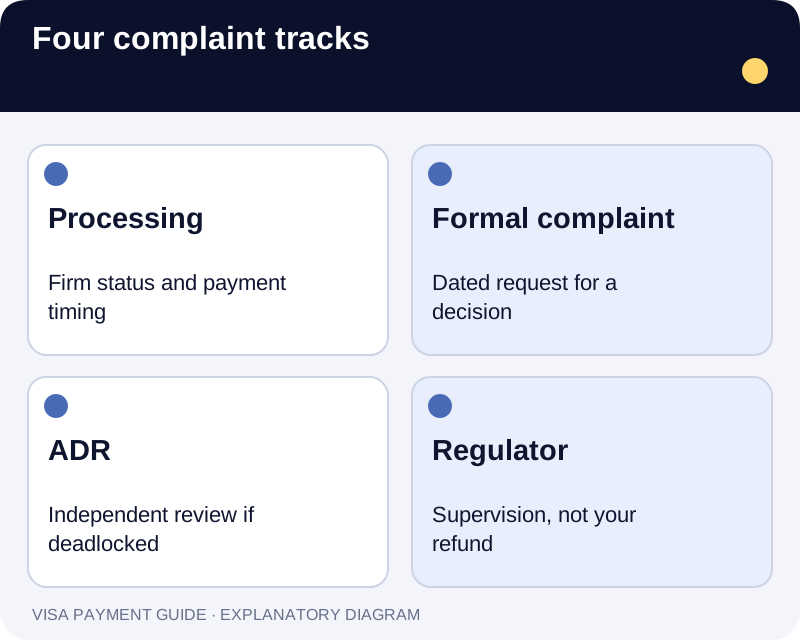
Processing, complaint, ADR and regulator: four different tracks
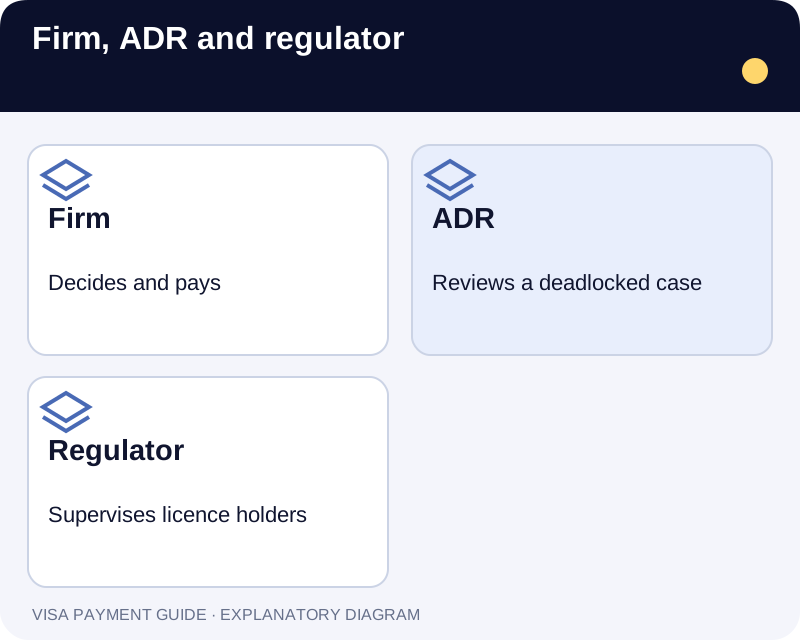
A pending withdrawal is an operational matter. A formal complaint is your request for a decision. ADR means independent dispute resolution. A report to the Commission is regulatory intelligence. It is not a claim.
The Commission's consumer guide says to complain to the operator first and keep dates, times, amounts and evidence. These are different things, and mixing them wastes time.
| Your situation | Correct first step | Who decides | What it can achieve |
|---|---|---|---|
| Cash requested, still pending | Check the firm's stated processing time; ask for a status update | The firm | Payment or a clear reason for delay |
| Firm says you breached a term | Formal complaint with your evidence | The firm, then ADR if deadlocked | A reasoned decision; possible payment |
| Firm ignored your complaint | Chase in writing; note the eight-week point | The firm, then its ADR provider | Reply, final position, or ADR access |
| You suspect a licensing breach | Report to the Gambling Commission | The Commission | Regulatory action, not your refund |
The eight-week figure is a complaints-handling ceiling. It is not an acceptable withdrawal wait, and it does not mean you must wait eight weeks before asking for a status update.
Build the case file before you write the complaint
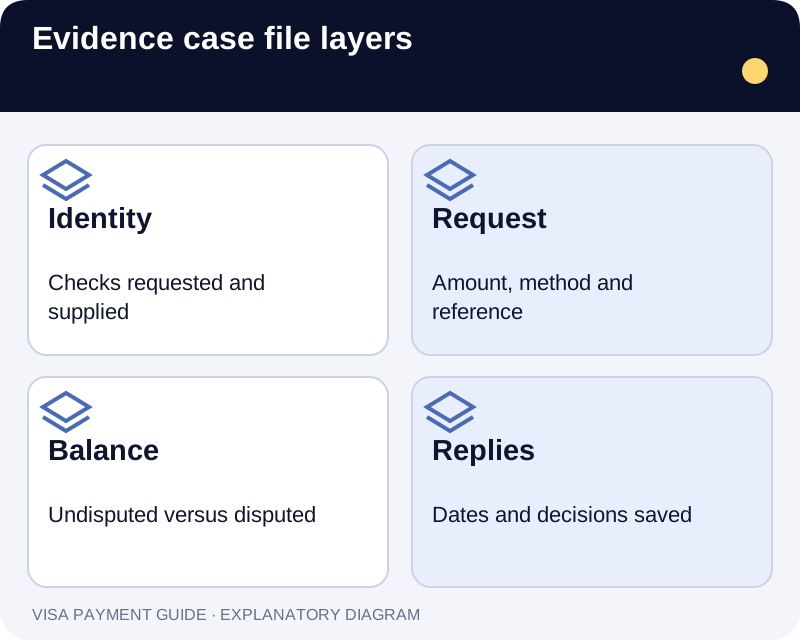
Good complaints are short and hard to dispute. Use a simple evidence ledger. List each fact once, with its date and where the proof sits.
Keep copies offline. Do not send full card numbers or your whole bank statement. Redact anything unrelated to the dispute.
- Identity and account: account email, verification request dates, documents supplied.
- Cash request: amount, method, time, reference, and the firm's stated processing time.
- Balance: what you say is undisputed and what is in dispute.
- Replies: each message, its date, and the decision it contains.
- Terms: the exact clause the firm relies on, saved as a file.
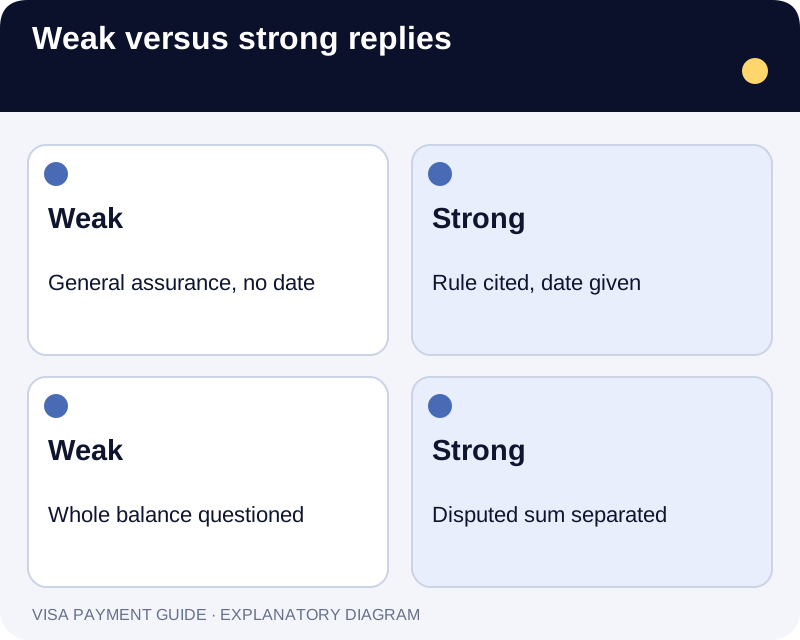
Split the money. If you requested £600 and the firm questions £100, say so plainly. Ask for the £500 you say is undisputed while the rest is examined. This makes a fair offer easier and shows you are reasonable.
Check the firm's identity and licence status with our licence check guide. Note the trading name on your statement, which may differ from the brand.
What counts as useful proof
Proof means a record a stranger can check. Screenshots help, but only with dates and context. A bank statement showing a debit is stronger than a memory of a deposit.
Do not rely on chat logs alone. Export them, keep the timestamps, and note who said what. If the firm's app shows a withdrawal reference, save it.
| Claim | Strong proof | Weak proof | Why it matters |
|---|---|---|---|
| I requested cash on a date | Withdrawal reference and confirmation email | "I remember doing it" | Fixes the timeline |
| I deposited that amount | Redacted bank or card statement line | An old balance screenshot | Ties money to source |
| The firm cited a rule | Saved copy of that clause | Your paraphrase | Tests whether the rule applies |
| Verification was requested | Email or message with date | A verbal note | Explains any hold |
If identity checks are the sticking point, read our guide to identity checks before you reply. Send only what the firm asks for, by its stated secure route.
Write a complaint the firm can answer
Use a fixed structure: what happened, what you want, and your evidence list. Keep to one page if you can. Put dates in one column so the reader can follow the sequence.
Ask one clear question. For example: "Please confirm the rule you rely on and the date my withdrawal was refused." A specific question produces a specific answer.
- State the outcome you want: payment, a written decision, or release of part of the balance.
- Attach the evidence ledger, not every document you own.
- Set a reply date that reflects the firm's own stated process.
- Ask for the firm's final position if it will not pay.
The Commission's operator-facing ADR guidance describes deadlock or a final position as the point at which ADR may be available, and the consumer guide points to the eight-week ceiling. Check the firm's named ADR provider and that provider's own scope and deadlines.
Our card payment disputes guide explains a separate route. Card disputes concern the payment, not the gambling contract. Keep the two cases separate. Record which route you use and when. This avoids mixing evidence and deadlines.
Worked example: a disputed £600 withdrawal
This example is illustrative. It uses invented dates and amounts and does not describe any real customer.
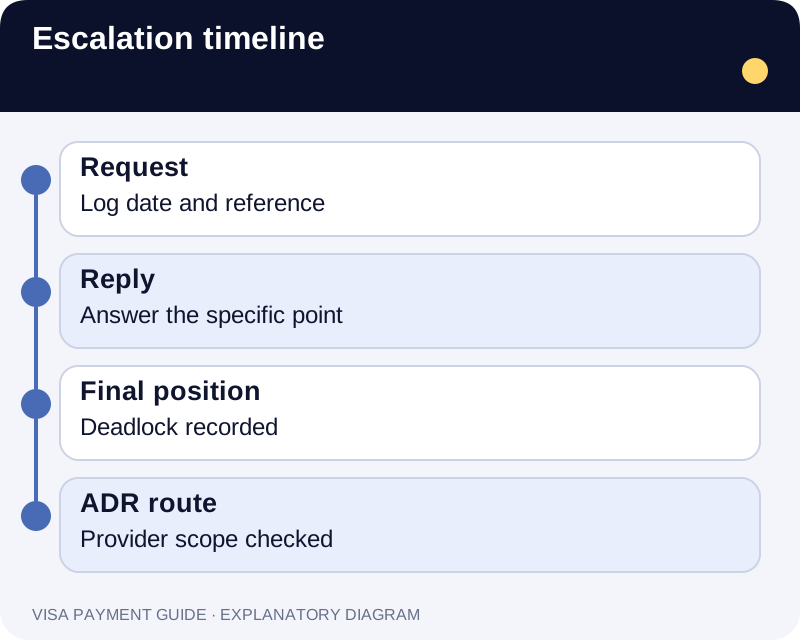
Suppose you request £600 on 3 March. The firm pays £500 on 10 March and holds £100, citing a bonus term. You disagree. Your case file shows the request reference, the £500 credit and the clause quoted.
You complain on 11 March. You ask for the £100, the exact rule, and the date it was applied. The firm replies on 25 March with a final position. You now have a deadlock date to give the ADR provider.
| Date | Event | Proof held | Effect on case |
|---|---|---|---|
| 3 March | £600 requested | Reference and email | Starts the clock |
| 10 March | £500 paid, £100 held | Bank credit line | Narrows the dispute |
| 11 March | Formal complaint sent | Sent copy and receipt | Creates a record |
| 25 March | Final position received | Full reply saved | May open ADR |
The disputed sum is £100, not £600. Say so. A clear split helps ADR focus on the rule and its application, and it stops the firm answering the wrong question.
If the firm relies on a term, ask when it was shown to you and how it applies. Keep the answer. Our guide to payment blocks may help if a bank or processor, rather than the firm, is the obstacle.
Use ADR and the regulator correctly
ADR is independent dispute resolution. It can review a deadlocked complaint within its scope. It is not a guarantee of payment, and it does not cover every issue.
Before you apply, confirm the firm's named provider. Read that provider's eligibility rules and time limits. Do not assume a universal deadline. The provider's own terms control.
- Send the final-position letter and your evidence ledger.
- State the disputed amount and the outcome you seek.
- Keep the provider's reference and reply dates.
- Do not open duplicate cases with two providers at once.
The Gambling Commission says it does not resolve individual financial disputes or recover a customer's funds. Its role is regulatory. A report can be useful, but it is not your claim.
Use the Commission's consumer complaints guide for the official sequence, and its common enquiries page for what it does and does not handle.
Privacy and cross-border points
Great Britain and the UK are not identical for gambling regulation. The Commission regulates gambling in Great Britain; Northern Ireland has a separate framework. Check which law and regulator apply to the firm you used.
Send redacted documents. Keep your case file in one folder and back it up. If a firm asks for proof by post, use a tracked service and keep the receipt.
Our Visa withdrawals guide covers card-route timing and references. It does not change the complaints sequence above.
This is general information, not legal or financial advice. We reviewed the public documents linked here on 14 November 2026. That review covered the Commission's consumer complaints guide, its ADR guidance for licensees, and its common enquiries page. Source publication dates differ from our review date.
FAQ
Must I wait eight weeks before ADR?
Not always. The eight-week figure is the complaints-handling ceiling in the Commission's consumer guide. Its ADR guidance for licensees treats deadlock or a final position as the trigger, so a firm's final reply may open ADR sooner. Check the named provider's scope and deadlines.
Can the Gambling Commission get my money back?
No. The Commission says it does not resolve individual financial disputes or recover a customer's funds. It supervises licensees and can act on regulatory information. Your payment route is the firm's complaint process. Then use its ADR provider where eligible.
What if only part of my balance is disputed?
State the split clearly. Ask for the undisputed amount and explain why the rest is disputed, with dates and the clause relied on. A precise figure helps the firm and any ADR provider focus on the actual disagreement rather than the whole balance.
Which ADR provider should I use?
Use the provider named by the firm and check that it covers your issue. Read its eligibility rules, evidence format and time limits before applying. Do not assume one provider fits every firm, and do not run two cases about the same dispute at once.
Does Great Britain differ from the UK here?
Yes, for regulation. The Gambling Commission regulates gambling in Great Britain. Northern Ireland has a separate framework. Confirm which rules and complaints route apply to the firm and licence you actually used. Do this before you rely on a process.
Source note: public pages reviewed 14 November 2026. These include the Commission's consumer complaints guide, ADR guidance for licensees, and common enquiries page. Figures are explanatory diagrams, not screenshots.